Monday, February 28, 2022

ADA Evaluates Proposed Revisions


A respected dentistry professional in Louisville, Kentucky, Dr. Christopher C. "Chris" Babcock is an experienced oral and maxillofacial surgeon who treats patients at Louisville Oral Surgery & Dental Implants. Christopher C. Babcock, MD, DMD, belongs to several dental associations, including the American Association of Oral and Maxillofacial Surgeons and the American Dental Association (ADA).

In December 2001, the American National Standards Institute (ANSI) approved the American Dental Association (ADA) Standard No. 2000.5 for SNODENT. The Systematized Nomenclature of Dentistry (SNODENT) was created due to the need to form generally accepted and standardized terminologies in oral medicine. The terminologies will be used in electronic documents to mitigate the chances of confusion and encourage consistency in data retrieval and processing in the national health care systems.

ADA has cultivated the habit of ensuring that suggestions regarding modification of SNODENT are well scrutinized before they are sent to ANSI for further scrutiny. The SNODENT Maintenance Committee prepares proposed revisions to SNODENT (recommendations). The association has evaluated each suggestion through the ADA SNODENT Canvass Committee, a team of volunteer experts who review, comment, and vote on submissions. Unanimous decisions by the committee help decide whether suggestions are to be relayed to the ANSI.

Tuesday, November 2, 2021

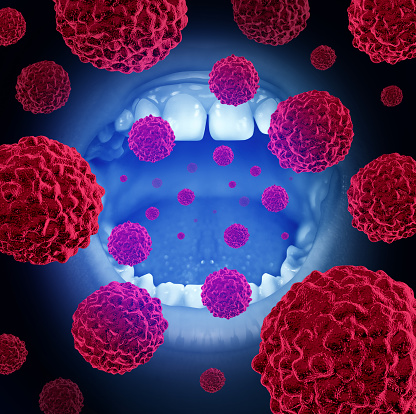
How AAOMS Supports Oral Cancer Awareness

Christopher C. Babcock, MD works as an oral and maxillofacial surgeon and a business and healthcare executive. As an executive, Dr. Chris Babcock is the owner and managing partner of Babcock Realty. An oral and maxillofacial surgeon, Christopher C. Babcock, MD is a member of the American Association of Oral and Maxillofacial Surgery (AAOMS).

The AAOMS aims to provide patients with access to safe and effective care through oral and maxillofacial surgery. The organization also promotes and advances the skills and professionalism of AAOMS members. AAOMS uses various measures to achieve its goals, one of which is raising oral cancer awareness.

Out of all the people newly diagnosed with oral and pharyngeal cancer, only 60 percent will live past five years. Because oral and pharyngeal cancers are usually discovered late, the fatality rate associated with them remains high.

Comprised of dental and medical practitioners who treat these cancers, AAOMS encourages oral cancer awareness by supporting two oral cancer programs observed in April. These are the Oral Head and Neck Cancer Awareness Week (OHANCAW) and the Oral Cancer Awareness Month. Both programs are organized by the Head and Neck Cancer Alliance and Oral Cancer Foundation, respectively.


from WordPress https://ift.tt/2ZJxiMe
via IFTTT

Thursday, October 14, 2021

The Reasons Most Beekeepers Do Not Work with Africanized Bees

Christopher C. Babcock, MD, DMD, studied dentistry and medicine at the University of Louisville and graduated with oral and maxillofacial surgery residency. For his bachelor’s, he studied biology at Indiana University, Bloomington, Indiana. Christopher C. Babcock is one of the several people in the United States that practice beekeeping as a hobby.

Africanized honey bees, as a new sub-species, were introduced into the United States in the 1990s. At the time, the goal was to improve the endurance of the current bee species in the United States. But, because of their terrible reputation, these honeybees are dubbed ‘Killer Bees.’ Not only do the bees abscond (abandon the hive), they become very easily enraged at the slightest provocation.

Africanized honey bees are difficult to work with because of their temperament. For beekeepers, wearing full-body protective garments all the time, especially in hot weather, can rapidly become quite uncomfortable. European honey bees, in comparison, take a long time to sting, and when they do sting, they create smaller clusters with fewer bees than Africanized bees.


from WordPress https://ift.tt/3mTNpPu
via IFTTT

Friday, October 8, 2021

Advice for High School Students Who Want to Be Dentists

Christopher C. Babcock MD, DMD, is an experienced dentist with about two decades of experience. As an oral and maxillofacial surgeon, he performs dental implant surgeries, dental extractions, wisdom teeth removal, and oral pathology procedures for patients. Christopher C. Babcock became a dentist after studying at the University of Louisville from 1993 to 2003.

If you want to become a dentist after high school, there are many things you should do to make the process easy for yourself. The first and arguably the most important is to find out more about the line of work. You can achieve this by talking to a dentist or shadowing one at their office to get a better grasp of what you’re going for.

After that, it helps to have a post-secondary degree in science. Subjects like anatomy, biology, chemistry, pharmacology, etc. will be required on the way to becoming a dentist. The science subjects in high school will let you know whether you do appreciate some of the topics covered in dental school. However, don’t be disheartened if biology isn’t your strong suit; there are many dentists who majored in other non-science disciplines.


from WordPress https://ift.tt/3uTeh5E
via IFTTT

Monday, June 28, 2021

ADA Offers Implantology Course


As a dental surgeon, Christopher C. Babcock, MD, has acquired extensive experience in oral and maxillofacial surgery. In addition to his DMD degree, he completed surgery and anesthesia internships at the University of Louisville. Furthermore, Dr. Chris Babcock, MD, is a member of the American Dental Association (ADA).

The ADA is a professional membership organization that supports dentists through credentialing services, educational resources, and career opportunities. It offers various online courses for dentists pursuing continuing education too.

ADA continuing education courses cover many areas, such as clinical dentistry, practice management, and implantology. Implantology is a dentistry specialty focusing on teeth implantation following extractions or fractures.

The ADA offers a two-part implantology course titled All-Ceramic and Metal-Ceramic Restorations for Optimal Esthetics. Created by Dr. Charles Goodacre, the course examines the benefits and limitations of all-ceramic versus metal-ceramic crowns. Additionally, Dr. Goodacre addresses clinical aspects including tooth preparation, crown complications, and biocompatibility.

The course is open to ADA members and non-members. Participants earn a total of four continuing education credits upon completion.

Monday, March 1, 2021

Factors for Calculating Disability Coverage Needs


Oral and maxillofacial surgeon Dr. Christopher C. “Chris” Babcock has leveraged his MD and DMD in a Louisville practice for more than two decades. In 2014, Christopher C. Babcock, DMD, took a break from his career after enduring a severe spinal injury. His comprehensive disability insurance coverage contributed to his ability to maintain financial security. Since then, he has advocated for the widespread purchase of disability policies.


One out of every three working-age Americans will experience a disability or illness that will prevent them from working for 90 days or longer. Disability insurance serves as a financial buffer by replacing a percentage of a policyholder’s income until they are able to return to work. Coverage is provided at varying levels, with higher payouts usually incurring higher premiums. Before starting a policy, people should determine how much coverage they need.

No disability insurance plan will replace 100 percent of income, but the ideal payout amount should cover basic monthly expenses. There are also other factors to take into account. For example, people on disability leave often reduce their discretionary spending due to little or no commuting costs.

Depending on the extent of the disability, some people may choose to reduce their necessary costs even more by moving to an area with a lower cost of living. Further, the insurance payout may be subject to taxes. For these reasons, financial experts advise selecting a policy that compensates up to 70 percent of lost income. Higher-income earners can also purchase supplemental policies.

Friday, October 23, 2020

Common Wisdom Teeth Issues


Wednesday, September 30, 2020

The Give Kids a Smile Program at ADA


Friday, September 11, 2020

Tips for Choosing Guitar Strings


Currently a member of the American Association of Oral and Maxillofacial Surgeons, Christopher, Chris, C. Babcock, MD works as an oral and maxillofacial surgeon for Louisville Oral Surgery. Dr. Christopher C. Babcock also keeps bees and plays guitar.


Picking out which style and gauge of guitar strings can be a very personal choice for a guitar player. Although seemingly unimportant, the guitar strings have a big impact on tone. The gauge of the string is measured by the diameter of the string in thousandth of an inch. Although the exact tuning of each string can vary by player and tuning, the range of gauge across the strings can make the same guitar sound very different. Lighter gauges are generally easier to play, and larger gauges take more force.

Another big factor in guitar strings is the material used. The material generally ranges from type of guitar. Acoustic guitars use silk and steel, phosphor bronze, and bronze. Usually preferred by jazz or folk players, silk and steel are called such because they have a core of steel but are wound in silver or copper plated silk. Bronze are the brightest sounding strings, but also the most prone to losing their iconic sound. Therefore, phosphor bronze strings add phosphor to keep the strings from wearing out so quickly, but this addition causes the strings to have a less bright tone.

Tuesday, August 18, 2020

The Environmental Impact of Beekeeping


Friday, May 22, 2020

How a Disability Insurance Policy Can Help You


Christopher C. (Chris) Babcock, MD, DMD, practices at Louisville Oral Surgery and Dental Implants, where he has worked since 2018. In addition to being an oral surgeon, Dr. Christopher C. Babcock is a licensed health insurance and life insurance broker. In his work in the insurance field, Christopher C. Babcock, MD, encourages individuals to get a disability insurance policy.

Disability insurance provides a source of income for people unable to work after an injury or accident. Though many employers offer some form of disability insurance, the coverage is often short-term and may not cover the employee’s full salary.

Research indicates that roughly a third of Americans are likely to experience at least 90 days in which they are disabled in the course of their career, yet nearly 50 percent of workers do not have any coverage in case of an injury. The best time to purchase a disability insurance policy is while you are still young.

If you are young and healthy, qualifying is easier, and premiums are lower. As you age and develop health issues, the price increases. Disability insurance is especially important if you work in a profession in which your risk of injury is high. Not purchasing disability insurance is one of the biggest financial mistakes that workers can make.

Friday, May 1, 2020

How Impacted Wisdom Teeth Can Affect Health


Christopher C. (Chris) Babcock, MD, DMD, practices dentistry and oral surgery in Louisville, Kentucky. As a staff surgeon for Louisville Oral Surgery and Dental Implants, Christopher C. Babcock, MD, DMD, delivers important preventive and restorative treatments, including wisdom tooth extraction, a remedy for severely impacted wisdom teeth.

If wisdom teeth have no room to emerge, they are considered impacted. Without proper treatment, impacted wisdom teeth can lead to a host of oral health problems. For example, partially emerged wisdom teeth are difficult to reach through brushing and flossing, which can cause the buildup of plaque. Eventually, this plaque can infect the surrounding gum tissue and cause inflammation.

Bacteria from an impacted tooth can enter the bloodstream and spread infection throughout the body. At times, a cyst or tumor may develop near the impacted tooth. The tumor can grow so large that it causes misalignment and pain in the jawbone.

Complications from impacted wisdom teeth often require invasive surgical procedures or braces.

Thursday, April 9, 2020

Orthognathic Surgery - Postoperative Nutrition

Thursday, February 20, 2020

Common Wisdom Tooth Issues


Christopher C. “Chris” Babcock, DMD, MD, earned both his dental and medical degrees from the University of Louisville. As an oral and maxillofacial surgeon, Dr. Christopher C. Babcock performs third molar removals.

Third molars, also known as wisdom teeth, emerge in about 25 percent of people. Since the human jaw has shrunk over the course of millennia, many people do not have space for these teeth. This can cause several problems, including swelling, infection, and pain. Wisdom teeth can become impacted, which means there is no room in the jaw for them to emerge. Impacted teeth can press against other teeth, causing misalignment.

Wisdom teeth that do emerge can be difficult to clean and may make the person more susceptible to gum disease and cavities. They can also collect bacteria that can lead to jawbone or tooth infections. Further, poorly aligned or impacted wisdom teeth can also press against and damage facial nerves. While most people will not seek dental care for their wisdom teeth until a problem arises, some dentists recommend removing the teeth during late adolescence as a precaution.